
A Family Guide to Whale Watching in Washington
Whale watching can be a family story that lasts for years—but the best trip is the one your family can enjoy before, during, and after the wildlife appears. Tour length, travel to the boat, weather, food, restrooms, and each child’s comfort with waiting all play a part!
Puget Sound Express is a three-generation family business – so we get what it takes to make a memorable family experience. Our vessels include heated indoor cabins, outdoor viewing areas, and restrooms.
Start with the right duration
Half-day trips are the easiest fit for many families. Depending on departure, they are generally three to five hours—long enough for an amazing experience but easier to combine with meals, naps, and other activities. Full-day San Juan Island trips are approximately eight hours and include a two hour lunch stop in Friday Harbor. They can be excellent for older children who enjoy boats and exploration.
There is no universal “best age”
Children of all ages can have a wonderful experience on board. However in general, the older your child is, the more likely they are to understand and appreciate the trip. Consider whether your child can follow safety directions, tolerate several hours of motion, wait during the searching part of the trip, and move carefully with adult help.
Cabins, decks, food, and restrooms
We utilize different boats with different layouts, but all have outdoor viewing decks/platforms as well as heated indoor cabins with large windows. Restrooms are available onboard. Our galleys serve snacks, hot and cold beverages, and our signature homemade Blueberry Buckle. You can also pre-order a box lunch when you make your reservation. On our Full-Day Tours, the 2-hour Friday Harbor stop is a great chance for lunch in town on San Juan Island. You are welcome to bring your own food and beverages (no alcohol permitted). Whatever you bring will need to fit in your seating area.
Prepare children for the search
Explain that whales are wild and the crew must find them. Turn waiting into observation: look for blows, floating logs, seals, birds, current lines, lighthouses, and changes in water color. It might be helpful to give each child a job—wildlife spotter, map follower, question keeper, or family photographer. Since we do not know which whale species we will see on any given trip, we recommend not promising a particular species to your child.
Motion and sensory comfort
If motion sickness is a concern, ask a healthcare professional or pharmacist about age-appropriate options before the trip. Follow directions carefully; our staff cannot provide individualized medical guidance. Children sensitive to noise, crowds, or wind may benefit from hearing protection, a familiar layer, and planned cabin breaks.
Whales We See
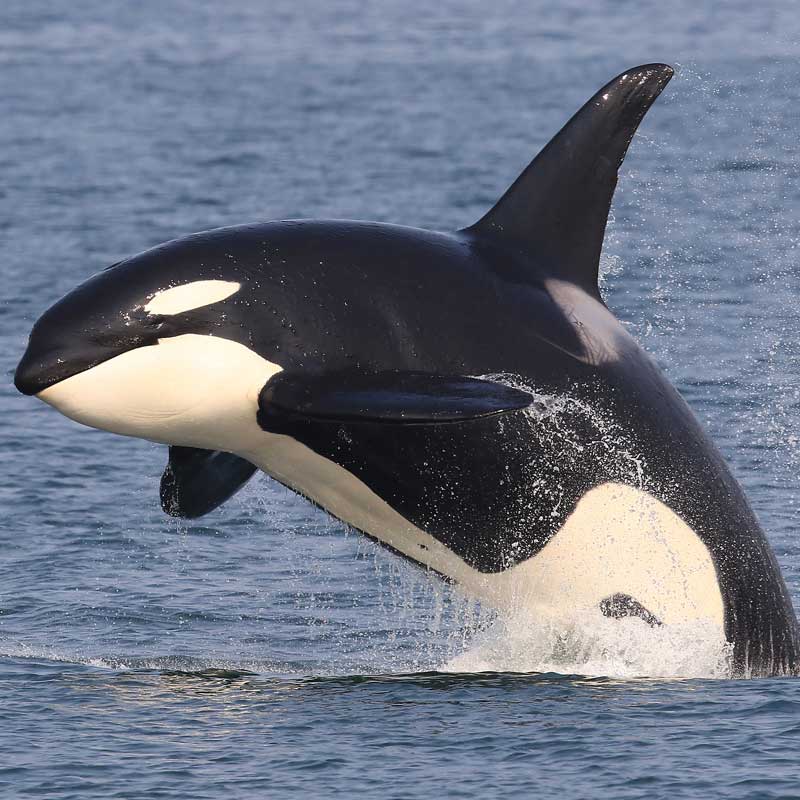
Bigg’s Orcas (aka Transients)
Bigg’s orcas are apex predators – mammal-eating orcas that feed on a variety of prey – from harbor seals to sea lions, and even dolphins and small whales. Bigg’s orcas generally travel in small groups, usually of two to six animals, and can range from Southern California up to the Arctic Circle. These are the orcas that we see most often in the Salish Sea, and they often put on quite a show after they complete a successful hunting foray! Bigg’s orcas are named in honor of cetologist Michael Bigg.
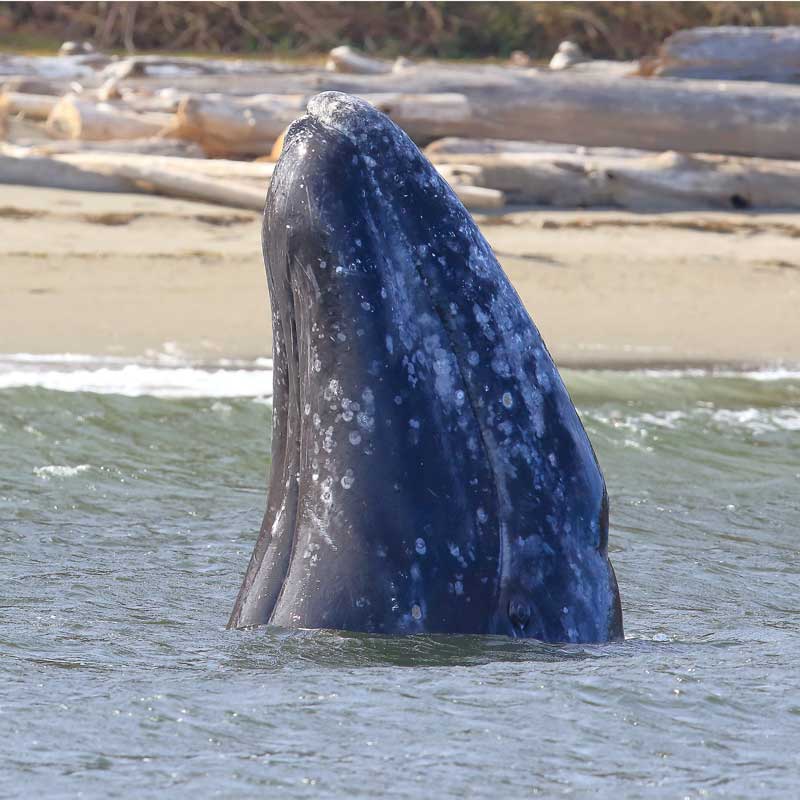
Gray Whales
The gray whale is a species of baleen whale with a dark slate-gray color, and is frequently covered by gray/white scars left by parasites which drop off in its cold feeding grounds. Grays have two blowholes on top of their head, which can create a distinctive heart-shaped blow at the surface. Adults range in length from 43–49 feet and weigh up to 40 tons. Each spring, gray whales migrate from the southern waters near Baja, north to Alaska. A small group of Grays nicknamed “Sounders” often turn east into Washington’s inland waters during the spring northern migration.
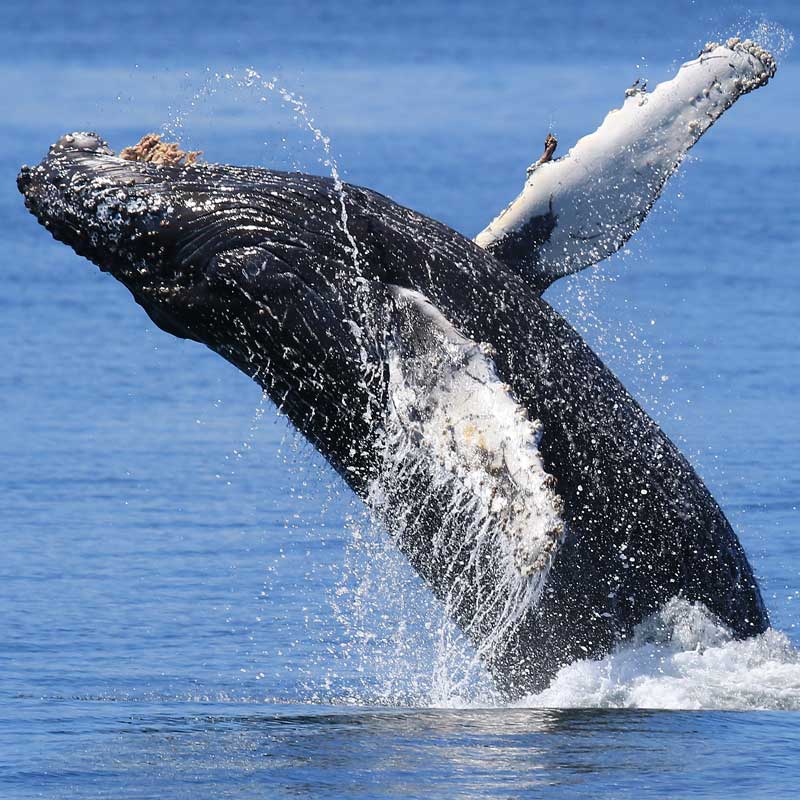
Humpback whales
The humpback whale is a species of baleen whale and has a distinctive body shape, with long pectoral fins and a knobbly head. They are known for breaching and other distinctive surface behaviors. Adults range in length from 39–52 feet and weigh nearly 40 tons. Their diet consists mostly of krill and small fish. Until commercial whaling was banned in 1996, humpbacks were nearly hunted to extinction. They have rebounded, however, and we are thrilled to have them back in our neighborhood.
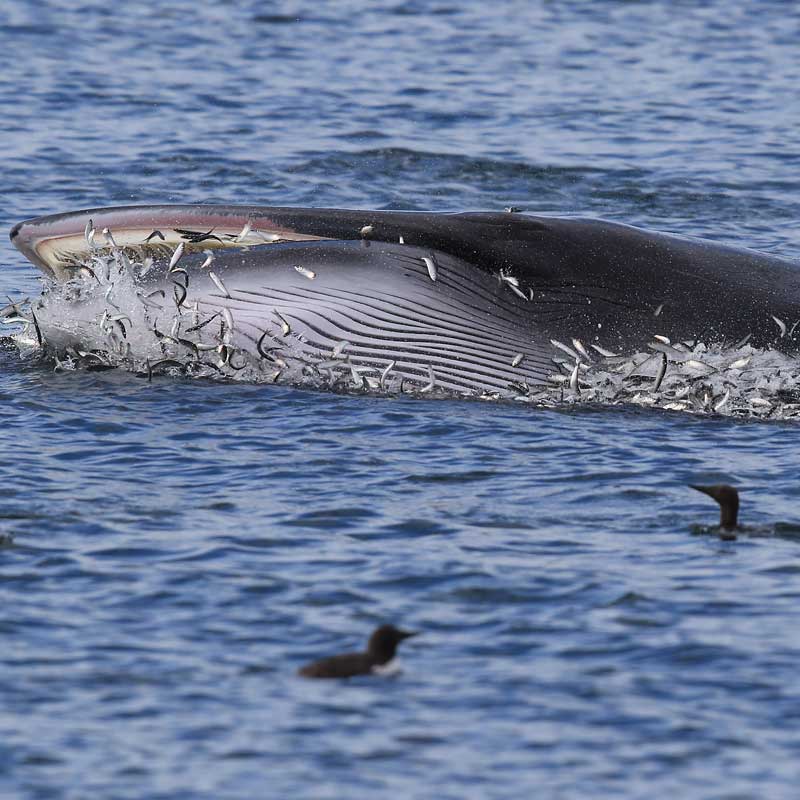
Minke whales
The elusive minke whale is among the smallest of the baleen whales. Previously known as a ‘piked whale’ or ‘lesser finback’, the minke has a dark gray back and white undersides. Their pectoral fins have a distinctive white patch or band. Minkes range in length from 23-33 feet and weigh up to 10 tons. Minke whales are widely distributed throughout the North Pacific and Atlantic oceans. They migrate seasonally from polar feeding grounds to equatorial waters, where they breed and calve. Minkes feed on small schooling fish, crustaceans, and plankton.
Latest News
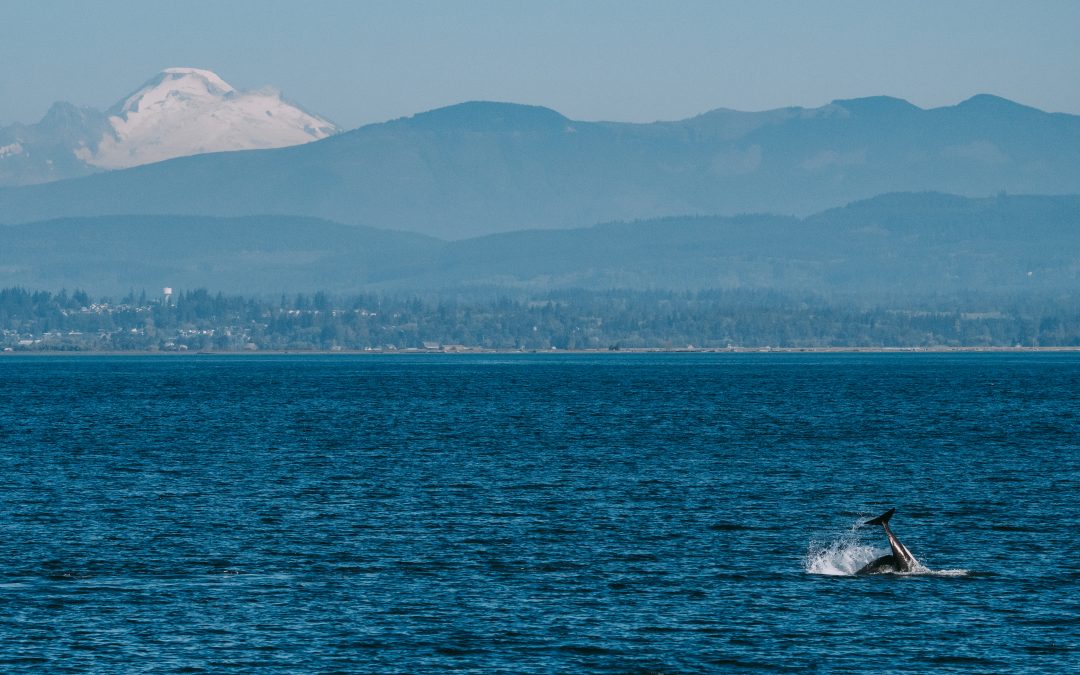
Learning through play with the T36s!
School is in session, and today’s lesson is all about learning through play! On our September 16 Half-Day Tour from Edmonds, guests and crew enjoyed a delightfully playful scene: T36B4 Auk (born in 2024) and T36B1A Maple (born in 2025) playing hard in Port Susan while...
Get Whale Updates
Get recent whale sightings, seasonal trip tips, and occasional seat alerts. Usually 1–3 useful emails per month; less often in winter. We respect your privacy; we will never share your email.