
Conservation
From wildlife research & health, to habitat restoration and advocacy – Puget Sound Express is committed to inspiring and educating our guests.
Connecting guests to the Salish Sea starts with education – a value we care deeply about. Our passionate and knowledgeable naturalists provide science-based information to our guests, whether those guests are 7 or 70 years old. Whales don’t live in isolation; they are part of the interconnected ecosystem we all share. We work hard to inform and inspire our guests so that when they leave our boats, they have a sense of what an astounding miracle our world is, and how humans and whales (and other wildlife!) fit within it.
We are honored to partner with the following like-minded organizations, who are working day-in and day-out to improve our ecosystem and educate all of us about how the various denizens of the Salish Sea can survive and thrive.
Cascadia Research Collective
Cascadia Research Collective, founded in 1979, is a non-profit dedicated to marine mammal and seabird research, animal behavior, ecology, and pollution studies. Since 1990, they’ve closely studied the gray whales feeding each spring around Whidbey and Camano Islands, using innovative tools like suction-cup video tags to better understand their behavior and habitat use.
They also monitor and respond to whale and pinniped strandings in Washington, investigating causes of death and threats such as entanglement in fishing gear—one of the greatest risks to West Coast whales. Through initiatives like the Partnership for West Coast Whale Entanglement Action, they work to protect whales, guide policy, and promote coexistence with fisheries.
Long Live the Kings
Since its founding in 1986, Long Live the Kings has worked to restore wild salmon and steelhead and to support sustainable fishing. Their programs―combining on-the-ground fieldwork with scientific innovation and broad partnerships―help decision-makers advance salmon recovery while balancing the needs of fish and people.
They are implementing solutions to rebuild salmon and steelhead populations in Hood Canal and Puget Sound, unraveling the mystery of low salmon survival in the Salish Sea, advancing science and retooling management throughout the Pacific Northwest.
Orca Network
Orca Network is a non-profit organization dedicated to raising awareness of the whales of the Pacific Northwest, and the importance of providing them healthy and safe habitats. A community is emerging that is increasingly attuned to the orca population, that cares about and tries to understand the needs of the Resident and Transient orcas that inhabit the Salish Sea.
Orca Behavior Institute
Orca Behavior Institute is a non-profit organization with a mission to conduct non-invasive behavioral and acoustic research on the killer whales of the Salish Sea and beyond. During certain times of year the Southern resident orcas have become more scarce than in years past. Simultaneously, Bigg’s killer whale encounters have been on the rise. What are the reasons for this, and now that transients are here more often, how are they using and sharing the habitat of the Salish Sea? OBI not only tracks Southern Resident killer whales, but the presence and absence of Biggs orcas, as well, in the hope of gaining some insight into these and other questions.
Port Townsend Marine Science Center
The Port Townsend Marine Science Center (PTMSC) is a 25-year-old educational organization offering exciting, field-based experiences to students of all ages. Dedicated professional educators, assisted by interns and trained volunteers, share their passion and knowledge of the marine environment through classes, beach investigations, organized tours, residential programs, teacher workshops and summer camps.
PTMSC is located on Admiralty Inlet at the confluence of the Strait of Juan de Fuca and Puget Sound. Sandy beaches border the PTMSC’s two historic buildings on the grounds of Fort Worden State Park. Short walks take students to rocky beaches, glacial bluffs, a brackish lagoon or a freshwater pond.
Center for Whale Research
The Center for Whale Research (CWR) is dedicated to the study and conservation of the Southern Resident killer whale (orca) population in the Pacific Northwest.
Every year for over four decades, CWR has collected detailed demographic data on the Southern Resident killer whale population, recording all observed births and deaths. They have also gathered detailed information on the behavior and ecology of these animals, including information on where the animals are in geographic location and time, and their social behavior and foraging patterns. This dataset has provided ground-breaking insight into killer whale biology and ecology that helps inform management decisions to conserve this vulnerable and now endangered population.
Donate
Help us help the whales! Your single donation supports all of our partner organizations – Cascadia Research, Long Live the Kings, Orca Network, Orca Behavior Institute, Port Townsend Marine Science Center, and the Center for Whale Research.
Latest News
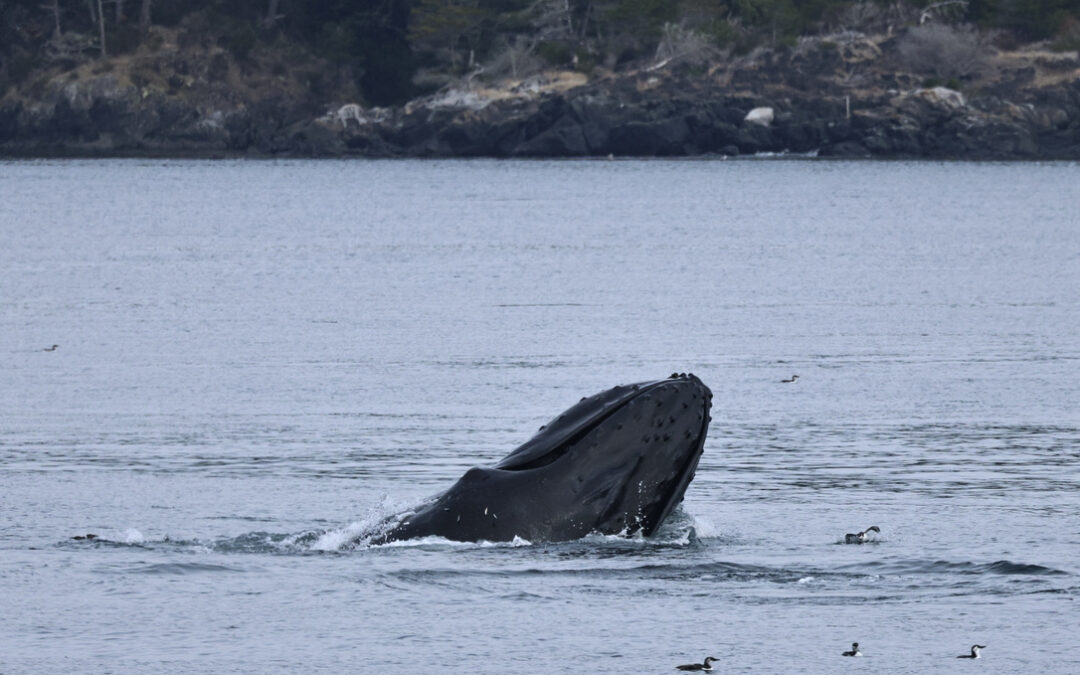
Autumn 2026: 3-Day Wildlife Cruise Trip Log
Day 1: Smith & Minor Islands, Deception Pass, orcas at Bird Rocks, sea lions at Whale Rocks (82 nm) We departed on Tuesday from Port Townsend under the cover of fog, but in great spirits. Instead of the high winds forecast for the day, we found flat, calm seas all...
Email Newsletter
Get the latest updates on the whales we’re seeing as well as tour updates and announcements. We send 1-2 emails/month. We respect your time and privacy; we will never share your email.